
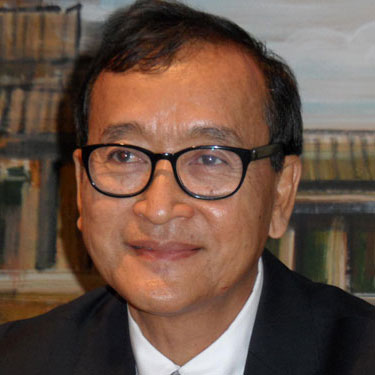
Sam Rainsy
Sam Rainsy, Cambodia’s finance minister from 1993 to 1994, is the co-founder and acting leader of the opposition Cambodia National Rescue Party (CNRP).
China’s Strategic Canal in Cambodia May Cause Regional Destabilization
A Chinese-backed canal project aims to connect the Cambodian capital Phnom Penh on the Mekong river with the sea by 2028, removing the need...
France’s Macron Should Be Consistent and Invite Kim Jung-Un to the Elysée
French President Emmanuel Macron was asked on 16 Jan. about how he would handle a possible re-election of Donald Trump in the US later...
Cambodia: Hun Dictatorship Bets Fake Images Can Gloss Over Reality
Distortion of visual reality is one of the techniques by which the Hun Manet regime attempts to project a false image of modern Cambodia...
The World Must Not Forget Kem Sokha, Symbol of Democratic Change in Cambodia
On this International Human Rights Day, I call on the international community not to forget Cambodia. While the country may not be making headlines,...
Hamas Terrorists Are Comparable to the Khmer Rouge
The Israeli-Palestinian conflict and the images of it broadcast on television screens cannot leave anyone indifferent. Even a Cambodian like me, who was born...
Vietnam Stock Market Performance Shows Success of Anti-corruption Reforms
Comparing the behaviour of stock markets in Southeast Asian countries in parallel with their macroeconomic performances is an illuminating exercise. Several countries in the Association...
What Can We Expect From the New Cambodian Prime Minister Hun Manet?
Cambodia will have a new prime minister on August 22 in the person of Hun Manet, who will replace his father Hun Sen. This...
Cambodia: What Lies Behind the Sudden Resignation of Prime Minister Hun Sen?
The fact that Cambodian Prime Minister Hun Sen, now 71 according to the latest official change to his date of birth, has been seeking...
Don't miss
Foreign Policy
How Strategic Autonomy Played a Central Role in Modi’s Russia Visit?
During the Cold War days, India was the vanguard...
Human Rights
Rohingya Tragedy: Human Values Must Be Above All
There is no suffering more painful than when humanity...
Foreign Policy
India’s Multi-alignment Policy and Its Response to the Ukrainian War
India’s foreign policy under the leadership of Prime Minister...
Opinion
Donald Trump-Orban Meeting and the Populist-Liberal Debate
In recent days, the electoral verdicts in UK and...
Southeast Asia
Indonesia Can Learn from Germany regarding Corruption Prevention and Control
Corruption is like a cancer that is eating away...
