
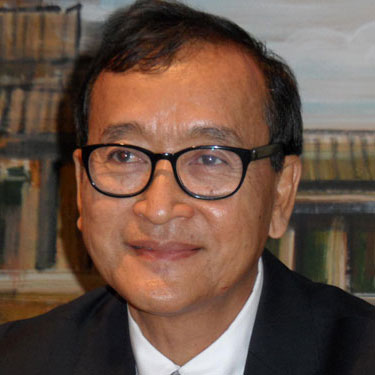
Sam Rainsy
Sam Rainsy, Cambodia’s finance minister from 1993 to 1994, is the co-founder and acting leader of the opposition Cambodia National Rescue Party (CNRP).
Cambodia Peace Treaty Shows How to Give Peace a Chance in Ukraine
The peace treaty signed in 1991 to end the war in Cambodia which had raged since the ousting of the Pol Pot regime in...
Ray of Hope From Paris for Victims of Political Violence in Cambodia
Today we commemorate the 18th anniversary of the assassination in Phnom Penh of popular trade union leader Chea Vichea on Jan. 22, 2004. Those...
LINE Can Protect Users by Confirming Messages Sent by Cambodia’s Hun Sen
The Japan-based LINE messaging app has the chance to strengthen the protection of its users and prevent unjust government punishment. It can do so by providing crucial evidence in...
Cambodia Is Being Turned Into a Political Advert for Chinese Vaccines
Cambodia has achieved an impressive rate of vaccination against COVID-19. In mid-November, 79% of the population had been fully vaccinated with two doses, putting...
Cambodia Doomed to Repeat 2018 Electoral Farce Until Opposition CNRP Reinstated
Cambodia risks repeating the electoral farce of 2018 when the ruling Cambodian People’s Party (CPP) won all the seats in a bogus exercise which...
Free World Can’t Let Myanmar Join Cambodia under China’s Umbrella
The call for a popular uprising against the military junta in Myanmar made by the National Unity Government (NUG) recently formed by the democratic...
Role of Genetic Factors in Limiting COVID-19 Mortality Confirmed
Genetic factors play a key part in determining COVID-19 mortality rates, and, in south-east Asia, provide populations with a degree of protection. The number of...
COVID-19 Vaccine Programmes Need Review as Natural Immunity Grows
This article refers mainly to the health situation in France but its arguments apply also to the whole of the European Union, which has...
Don't miss
Sponsored
CGTN’s Global South Voices exposes the vulnerability of “China’s overcapacity” hype
"There's a lot of hype in certain countries, especially...
Geopolitics
On Thin Ice: Navigating the Pitfalls of Himalayan Geopolitics
When discussing Asian power politics, there is an understandable...
Foreign Policy
Unveiling the Real Playbook Behind U.S. Aid in the Ukrainian Theatre
The recent approval of a substantial aid package by...
Opinion
Is There Overcapacity or Insufficient Supply in China’s New Energy?
As a developing country deeply intertwined in the global...
Central Asia
Kazakhstan’s New Legislation to Combat Domestic Violence
On April 15, the President of Kazakhstan, Kassym-Jomart Tokayev,...
