
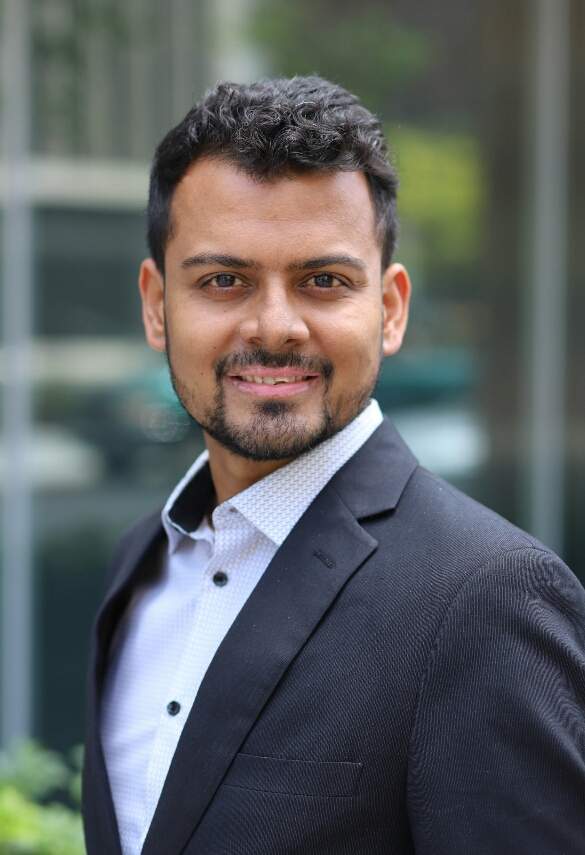
Vivek Mishra
Vivek Mishra is a Research Fellow at Indian Council of World Affairs, New Delhi. He is also Assistant Professor (on leave) in International Relations at the Netaji Institute for Asian Studies, Kolkata and Deputy Director, Kalinga Institute of Indo-Pacific Studies, Bhubaneswar. He has been 2019 South Asian Voices Visiting Fellow at the Stimson Center, Washington D.C. and a Fulbright Visiting Scholar in the Saltzman Institute of War & Peace, School of International Public Affairs, Columbia University, NY for the academic year 2015-16. Vivek has completed his PhD in International Relations at Jawaharlal Nehru University (JNU), New Delhi. His broad research discipline is international relations and his areas of research concern probing American and Chinese security role in the Indian Ocean and Indo-Pacific and Asia-Pacific regions, including Indo-U.S. defense relations and the Indian defence sector.
Xi’s Visit to Myanmar: Major Concerns for India
During Xi Jinping’s visit from 17-18 January, China and Myanmar signed as many as 33 agreements, including multi-billion-dollar deals in infrastructure as well as...
Shangri La Dialogue 2019: Clash of World Views & Great Power Rivalry
The Shangri La Dialogue 2019 (SLD) held on May 31-June 02 not just reaffirmed the continuation of great power rivalry between the US and...
India and G20: Not All Steps in the Right Direction
India seems to have stepped up its relations with the G20 nations, even as 2018 became one of the rare years when Indian presented...
India-US COMCASA: Some Details on Technology Sharing
The latest strategic accomplishment between India and the US has been the Communications Compatibility and Security Agreement (COMCASA), a typified bilateral variant of one...
India’s S-400 Defense Systems Negotiations: Devil in the Details
The Indian Defense Minister Nirmala Sitharaman recently said the following about the status of India’s S-400 Triumf air defence missile systems negotiations with Russia:...
India-US-Russia and the S-400 Conundrum
Despite the Indian Defense Minister’s recent hint that the S-400 Triumf air defense missile systems for the Indian Air Force is in the final...
Strategic Hedging Through Foreign Policy: Exploring India’s Options
India should end ambiguity in its foreign policy, especially one that sways between the pulls of its erstwhile non-aligned stance and the need for...
Don't miss
Foreign Policy
How Strategic Autonomy Played a Central Role in Modi’s Russia Visit?
During the Cold War days, India was the vanguard...
Human Rights
Rohingya Tragedy: Human Values Must Be Above All
There is no suffering more painful than when humanity...
Foreign Policy
India’s Multi-alignment Policy and Its Response to the Ukrainian War
India’s foreign policy under the leadership of Prime Minister...
Opinion
Donald Trump-Orban Meeting and the Populist-Liberal Debate
In recent days, the electoral verdicts in UK and...
Southeast Asia
Indonesia Can Learn from Germany regarding Corruption Prevention and Control
Corruption is like a cancer that is eating away...
