
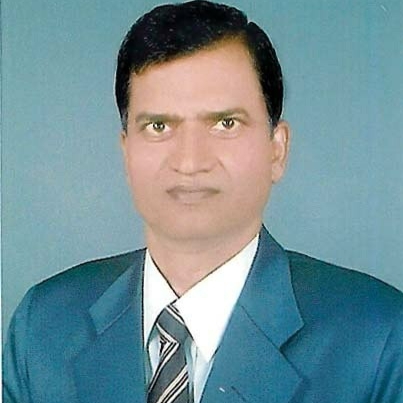
Dr. Rajkumar Singh
Dr. Rajkumar Singh is a University Professor for the last 20 years and presently Head of the Postgraduate Department of Political Science, B.N.Mandal University, West Campus, P.G. Centre, Saharsa (Bihar), India. In addition to 17 books published so far there are over 250 articles to his credit out of which above 100 are from 30 foreign countries. His recent published books include Transformation of modern Pak Society-Foundation, Militarisation, Islamisation and Terrorism (Germany, 2017), and New Surroundings of Pak Nuclear Bomb (Mauritius, 2018). He is an authority on Indian Politics and its relations with foreign countries.
Impact of Covid-19 on Religion and Beyond
Religion, in fact, is a way of life pursued by the followers of different faiths all over the world. The coming of pandemic at...
Understanding the Factors Behind the Kashmir Conflict
From 1989 onwards militancy in Kashmir had passed through various phases. It acquired a qualitatively new terrorist character. Having permitted conditions within Kashmir to...
Indian perceptions of China in Pre and Post 1962 Periods
Departure of the British from the subcontinent in 1947 deprived India of the necessary military strength that England had represented for so many years-...
Managed Governments and Insurgency in Jammu and Kashmir
With the seizure of British Paramountcy in the Indian subcontinent, princely states including the State of Jammu and Kashmir were asked to choose between...
Manifestations of Hindu-oriented Views in Indian politics and Society
The election results of 16th and 17th Loksabha, held in 2014 and 2019 in which the Bharatiya Janata Party got a thumping majority with...
Don't miss
Foreign Policy
Unveiling the Real Playbook Behind U.S. Aid in the Ukrainian Theatre
The recent approval of a substantial aid package by...
Opinion
Is There Overcapacity or Insufficient Supply in China’s New Energy?
As a developing country deeply intertwined in the global...
Central Asia
Kazakhstan’s New Legislation to Combat Domestic Violence
On April 15, the President of Kazakhstan, Kassym-Jomart Tokayev,...
Opinion
Analyzing Israel’s Calculated Response in the Shadow of Nuclear Concerns
In the ever-tense landscape of Middle Eastern geopolitics, Israel’s...
Geopolitics
Semiconductor Diplomacy: The 21st Century Oil
It’s hard to think of a component, in any...
