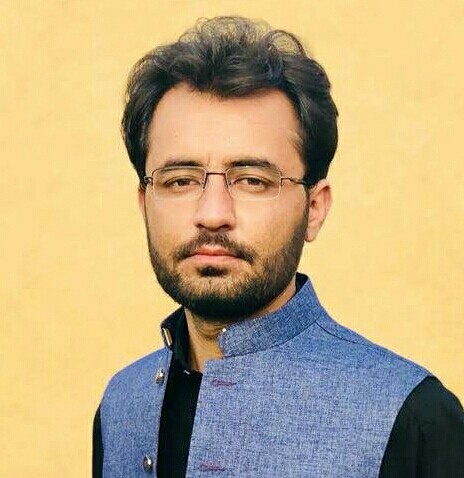
Abdul Rehmanis a Research Fellow at Balochistan Think Tank Network, BTTN, Quetta. He has earned Master’s degree in international relations from the Corvinus University of Budapest, Hungary.
Abdul Rehmanis a Research Fellow at Balochistan Think Tank Network, BTTN, Quetta. He has earned Master’s degree in international relations from the Corvinus University of Budapest, Hungary.
Abdul Rehmanis a Research Fellow at Balochistan Think Tank Network, BTTN, Quetta. He has earned Master’s degree in international relations from the Corvinus University of Budapest, Hungary.
Taliban, famously known for their brutalities and social restrictions on women (among other things) have once again emerged as a strong threat to Afghan...
Pakistan successfully hosted Aman-21, the seventh biennial multinational maritime exercise in the Arabian Sea from 11-16 February 2021. The Pakistan-led Aman-21 exercise consisted of...
Student unions have played a vital role in the struggle of independence and in the post-independence political system of Pakistan. Muslim Student Federation (MSF),...
China-Pakistan Economic Corridor (CPEC) is an under-construction project that connects Gwadar (Pakistan) to Kashgar (China), through the development of railways, highways, and pipelines. The...
Pashtun Tahafuz Movement (PTM) or Pashtun Protection Movement is a rights-based movement originated in early 2018 when an aspiring model Naqeebullah Mehsud from Waziristan...
India-China ties are improving, but border tensions, strategic rivalry, and Indo-Pacific competition require realistic expectations. Cooperation can grow, yet enduring differences will continue shaping the relationship.
QUAD Plus can reinforce a Free and Open Indo-Pacific by expanding intelligence, technology, and maritime cooperation, reducing dependence on China and strengthening regional resilience against coercion.
Canada's submarine choice highlights a key lesson: modern arms sales depend not only on capability and price, but also on alliances, strategic trust, and long-term security partnerships. South Korea must sell relationships, not just weapons.
Abiy Ahmed's political capital is shrinking as insecurity, inflation, elite fragmentation, and dependence on external patrons drive up the cost of power. Can Ethiopia's political marketplace sustain his rule much longer?
BRICS+ offers vast potential in trade, technology and local currency cooperation, but geopolitical rivalries and divergent strategic priorities will shape whether it emerges as a cohesive force or remains a loose coalition.